
 Jun-08-2026
Technical analysis is one of the most widely used methods for evaluating financial markets. From intraday traders to long-term investors, millions of market participants rely on charts, price patterns, and technical indicators to identify potential trading opportunities.
However, a common question remains: How reliable is technical analysis?
The answer is neither a simple yes nor no. Technical analysis can be highly effective when used correctly, but like any market tool, it has limitations. Understanding its strengths and weaknesses can help traders use it more effectively and improve decision-making.
This guide explores the reliability of technical analysis, factors affecting its accuracy, common misconceptions, and how investors can maximize its effectiveness.
Technical analysis is a method of evaluating securities by studying historical market data, primarily:
Unlike fundamental analysis, which focuses on a company's financial performance and intrinsic value, technical analysis examines market behavior to forecast potential future price movements.
The underlying principle is that all known information is already reflected in market prices.
Technical analysis helps traders:
Markets often move in recognizable trends.
Technical analysis helps determine whether a stock is:
Technical indicators can help traders decide:
Risk management is one of the most valuable applications of technical analysis.
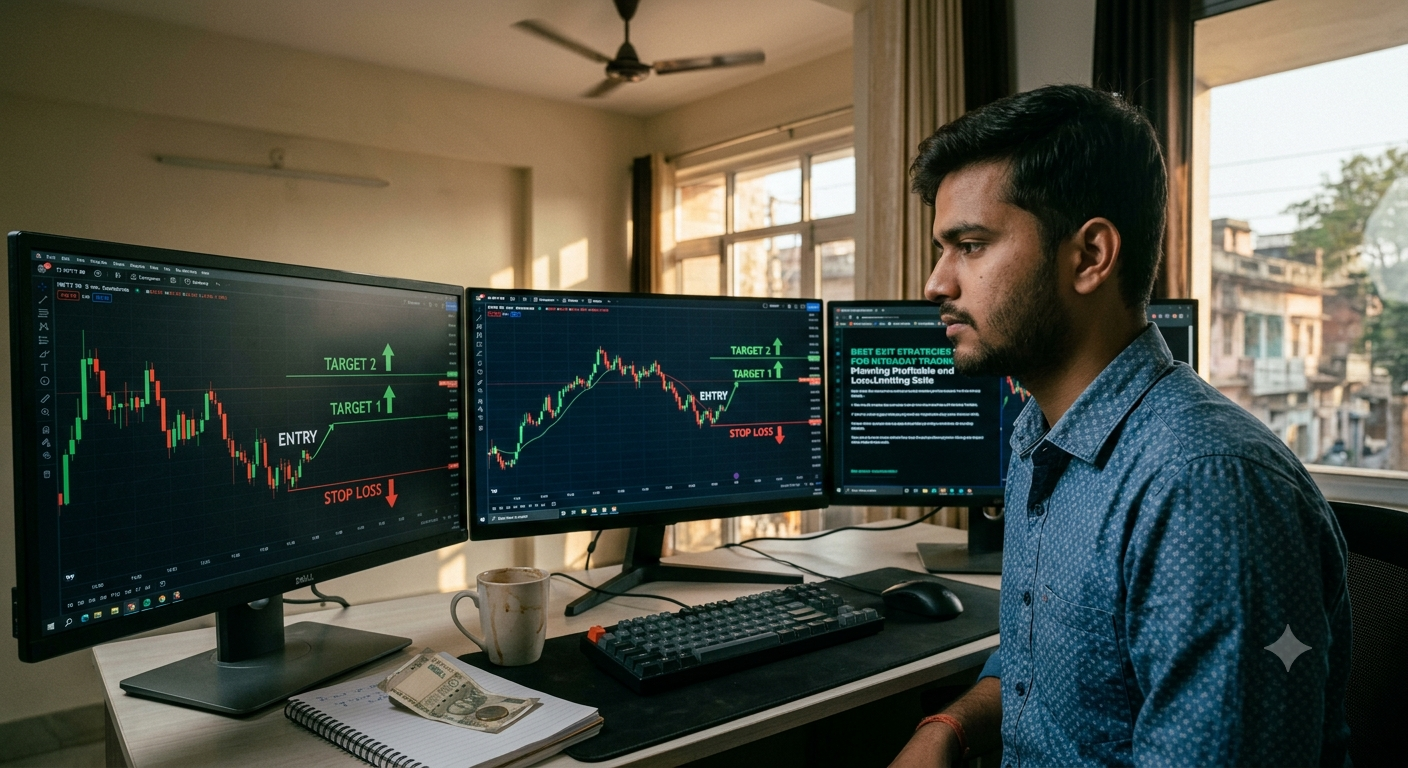
Traders use support and resistance levels to define risk before entering a trade.
Even long-term investors often use technical analysis to optimize buying and selling decisions.
Technical analysis is not designed to predict the future with certainty.
Instead, it provides probabilities based on historical market behavior.
Its reliability depends on several factors:
Many professional traders view technical analysis as a probability-based decision framework rather than a prediction tool.
Technical analysis can be applied to:
The principles remain largely consistent across markets.
Markets are driven by human emotions such as:
Technical patterns often emerge because investor behavior tends to repeat over time.
Examples include:
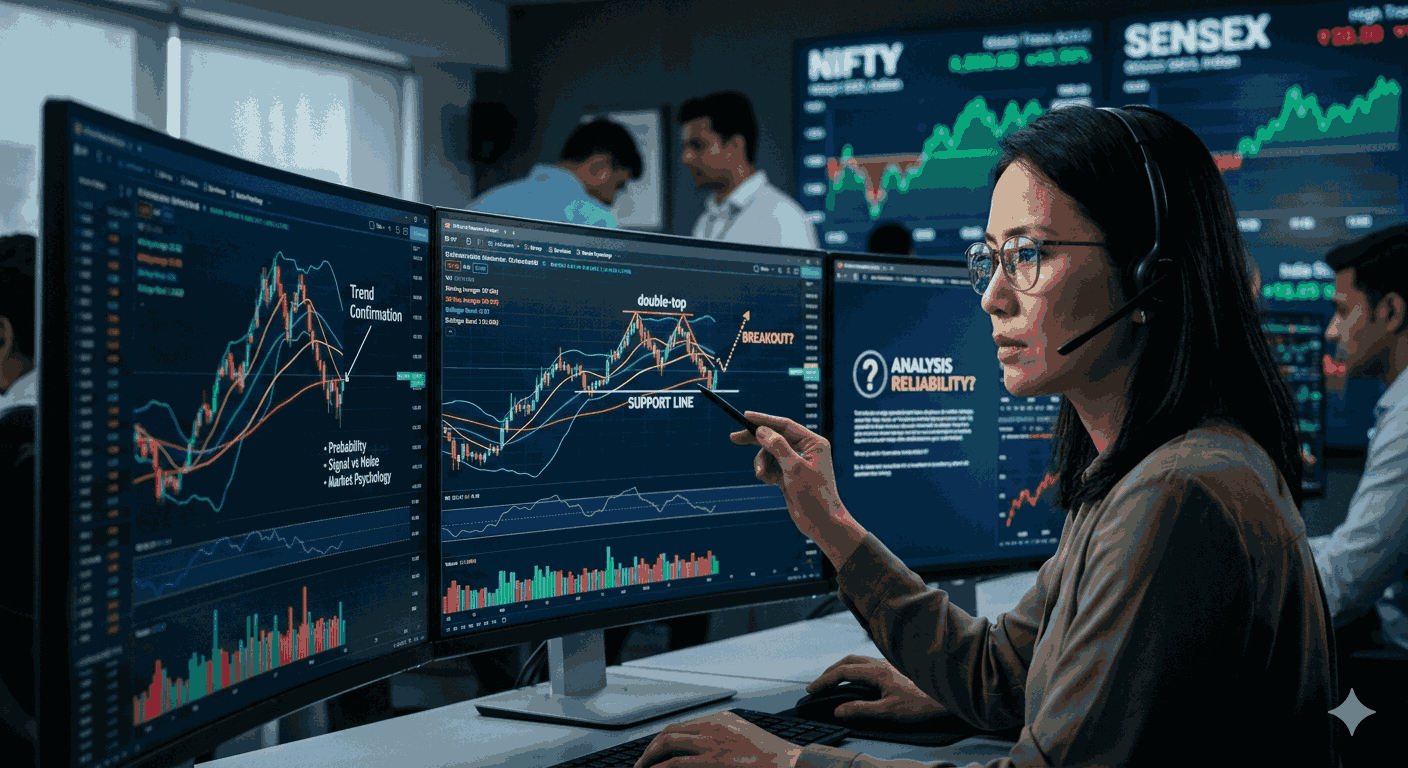
Trend-following tools such as moving averages can help traders identify emerging market trends before they become widely recognized.
Common indicators include:
Technical analysis allows traders to establish:
This structured approach improves trading discipline.
Every indicator can generate:
Even highly successful strategies experience losing trades.
Unexpected events can disrupt chart patterns.
Examples include:
Strong news events can invalidate technical setups instantly.
Different traders may interpret the same chart differently.
For example:
This subjectivity can affect reliability.
Technical analysis assumes historical price behavior may repeat.
However, market conditions can change significantly due to:
Using several indicators together often improves decision quality.
For example:
Multiple confirmations can reduce false signals.
Successful traders focus less on prediction accuracy and more on risk management.
Key practices include:
Even a strategy with a 50–60% success rate can be profitable with strong risk management.
Generally, technical signals tend to be more reliable on:
Compared to:
Longer time frames often reduce market noise.
Technical setups typically perform better when they align with the broader trend.
For example:
Trend-following approaches often generate more consistent outcomes.
Used to identify:
Most effective when combined with trend analysis.
Useful for:
Widely used by institutional and retail traders.
Helps identify:
Works best in trending markets.
Measures price volatility.
Often used to identify:
| Feature | Technical Analysis | Fundamental Analysis |
|---|---|---|
| Focus | Price Action | Company Financials |
| Time Horizon | Short to Medium Term | Medium to Long Term |
| Data Used | Charts & Indicators | Earnings & Valuation |
| Primary Objective | Market Timing | Intrinsic Value Assessment |
| Best For | Traders | Investors |
Many successful market participants combine both approaches for better decision-making.
Reality:
Technical analysis estimates probabilities, not certainties.
Reality:
Too many indicators can create confusion and conflicting signals.
Reality:
Technical analysis is used by:
Reality:
No pattern guarantees success.
Risk management remains essential.
Consider these best practices:
Trade in the direction of the dominant market trend.
Avoid relying on a single indicator.
Protect capital before seeking profits.
Follow predefined rules consistently.
Markets evolve continuously, requiring ongoing education and adaptation.
Technical analysis can be reliable when used as a probability-based framework combined with proper risk management and market context.
There is no universal success rate. Performance depends on strategy design, market conditions, and trader discipline.
Technical analysis helps estimate potential price movements but cannot predict future prices with certainty.
No single indicator is universally reliable. Many traders combine RSI, Moving Averages, MACD, and volume analysis for confirmation.
Both approaches serve different purposes. Technical analysis helps with timing, while fundamental analysis focuses on valuation and long-term investment decisions.
Yes. Many professional traders and institutional market participants incorporate technical analysis into their trading strategies.
Technical analysis is a powerful market analysis tool, but its reliability depends on how it is applied. It should not be viewed as a crystal ball that predicts future prices with certainty. Instead, it provides a structured framework for evaluating probabilities, identifying trends, managing risk, and making informed trading decisions.
The most successful traders understand that technical analysis works best when combined with sound risk management, market awareness, and disciplined execution. By treating technical analysis as a decision-support system rather than a prediction engine, traders can improve consistency and navigate financial markets more effectively.