
 May-25-2026
There’s a reason experienced traders treat short selling differently from regular investing. On paper, it looks simple — sell high, buy low, pocket the difference. But in reality, short selling is one of the fastest ways retail traders blow up their accounts.
Most beginners enter short trades because a stock “looks weak” or because social media is screaming that the market will crash. The problem? Markets can stay irrational much longer than traders can stay solvent.
Unlike buying stocks, where your maximum loss is limited to the amount invested, short selling carries theoretically unlimited risk. That single difference changes the entire game.
Short selling means borrowing shares from a broker and selling them in the market with the expectation that prices will fall. If the stock drops, you buy it back at a lower price and return the shares, keeping the difference as profit.
Example:
Sounds attractive, right?
Now look at the opposite side.
And if the stock keeps rising, losses continue increasing with no upper limit.
That’s the part most retail traders ignore.
When you buy a stock, the worst-case scenario is simple — the stock goes to zero.
But when you short a stock, there’s no ceiling to how high the price can go.
A stock can move:
This is why hedge funds with billion-dollar risk systems still get trapped in short positions.
Retail traders usually don’t have:
That combination makes aggressive short selling extremely dangerous.
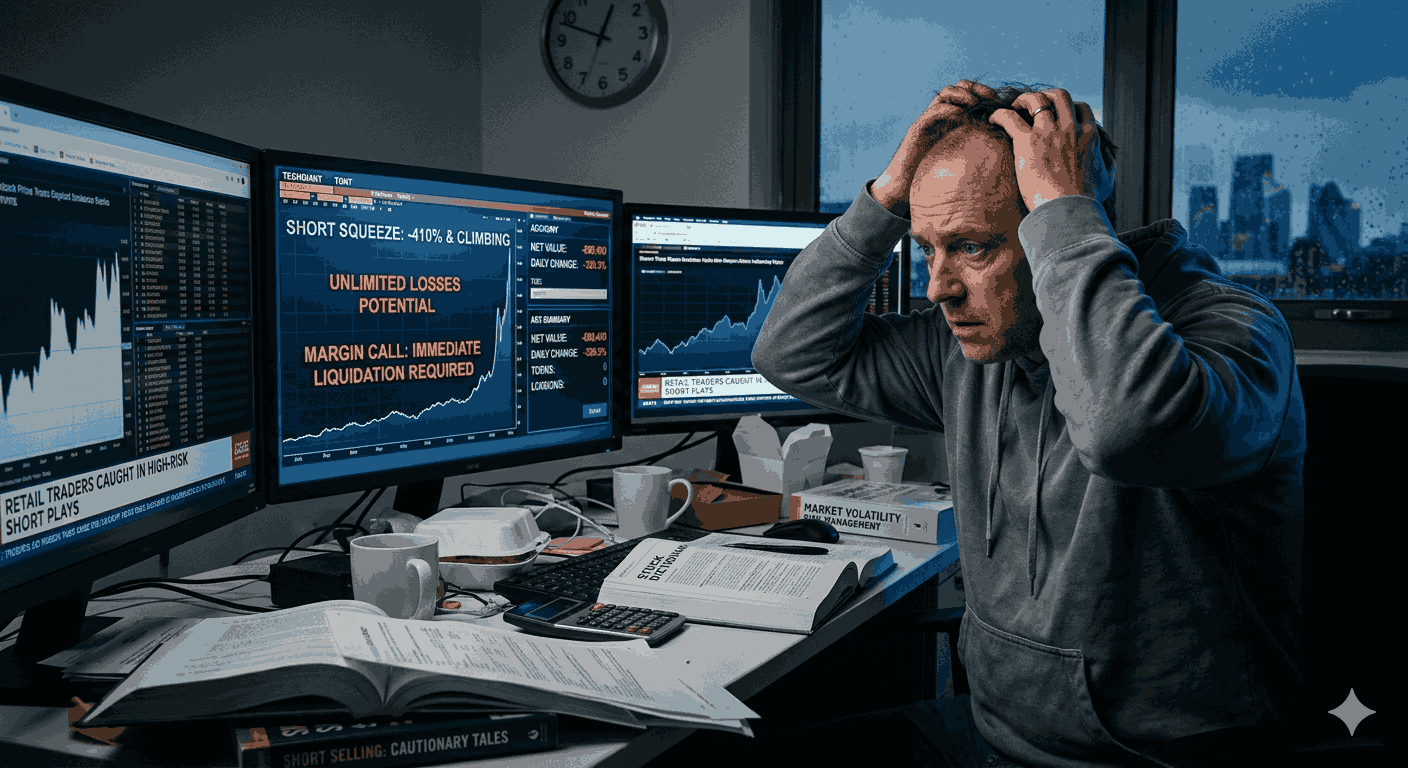
One major reason traders avoid naked short positions is the risk of a short squeeze.
A short squeeze happens when heavily shorted stocks suddenly start moving upward. Traders who shorted the stock rush to exit positions, creating more buying pressure and pushing prices even higher.
This creates a vicious cycle.
Some of the biggest market disasters started this way.
The most famous example was GameStop in 2021, where retail buying forced massive hedge funds into billions of dollars in losses.
Many traders assumed the stock was “overvalued.”
The market didn’t care.
Price action always wins over opinion.
Equity markets historically trend upward because businesses grow, economies expand, and inflation pushes valuations higher.
Short sellers are essentially betting against long-term economic growth.
That’s a low-probability game unless timing is perfect.
Long investors usually stay calm during rallies.
Short sellers panic during rallies.
Every green candle feels like a threat because losses expand rapidly. This psychological pressure causes:
Most traders underestimate how mentally exhausting short selling can become.
Short positions require margin maintenance.
If the trade moves against you, brokers may ask for additional funds. If you fail to provide margin, positions can be squared off automatically at heavy losses.
That’s why short selling during volatile markets becomes extremely risky for undercapitalized traders.
Many traders assume intraday short selling is safer.
Not always.
Intraday volatility can trigger stop losses within minutes, especially during:
Positional short selling is even riskier because overnight gaps can wipe out weeks of gains instantly.
One unexpected news event is enough to reverse the entire setup.
Short selling also comes with operational costs:
Even if your market direction is correct, execution costs can reduce profitability significantly.
That’s why many professional traders prefer:
Instead of direct naked short selling.
Short selling itself is not “bad.”
The issue is that most retail traders enter short positions without:
Professional traders short strategically.
Beginners often short emotionally.
That difference matters.
If you have a bearish market view, safer alternatives may include:
Risk remains limited to premium paid.
Instead of aggressive directional betting.
Focusing on probability rather than prediction.
Avoid anticipating crashes before trend confirmation appears.
Short selling looks exciting during market fear, but the risk-reward structure is heavily misunderstood by retail traders.
The biggest mistake traders make is assuming that a falling stock is automatically easier money.
In reality:
Most successful traders survive because they protect capital first and chase profits second.
That’s why disciplined risk management matters far more than predicting whether a stock will go up or down.
Yes, short selling is legal in Indian markets under SEBI regulations, especially for intraday trading. However, rules differ for retail and institutional participants.
Because losses are theoretically unlimited if stock prices continue rising.
Beginners should approach short selling carefully and only with strict risk management strategies.
Using put options or hedged bearish strategies usually offers limited-risk alternatives.
Yes, but they use advanced risk controls, hedging systems, and disciplined capital management.
why-you-should-never-short-sell-stocks
Short selling is risky because potential losses are unlimited while profits remain limited. Retail traders often underestimate volatility, margin calls, and short squeezes, making short selling one of the most dangerous trading strategies without proper risk management.